
In today’s rapidly evolving professional environment, traditional training methods often struggle to meet the demands of modern workplaces. Employees need hands-on experience, real-world problem-solving skills, and engagement that goes beyond passive learning. This is where Virtual Reality (VR) training has emerged as a game-changing solution. By combining immersive technology with practical learning objectives, VR training is reshaping how organizations educate, upskill, and retain their workforce.
Understanding What VR Training Is
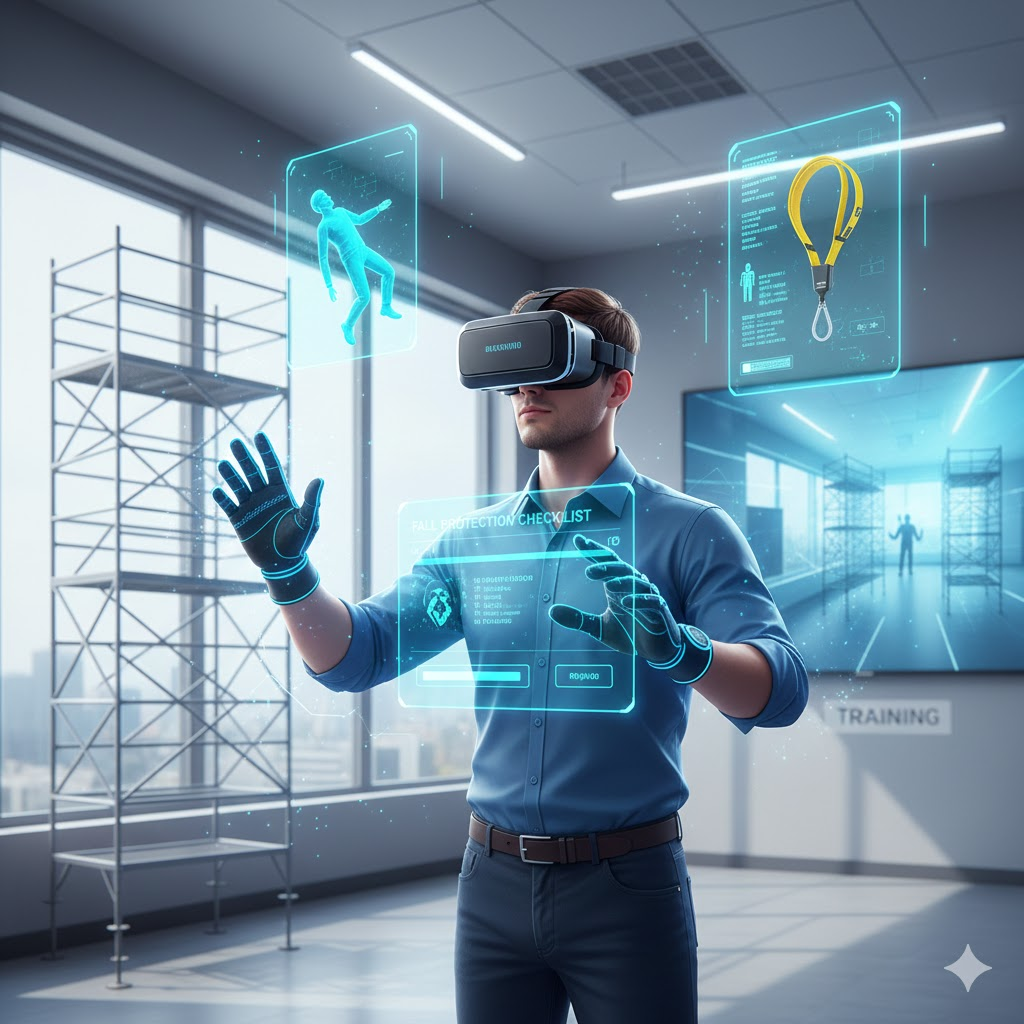
So, what is VR training? At its core, VR training is an innovative learning method that uses virtual reality technology to create realistic, interactive simulations. Participants wear VR headsets to enter a digitally created environment that replicates real-world scenarios relevant to their work. Unlike traditional classroom or e-learning modules, VR training provides an immersive experience where employees can practice tasks, make decisions, and experience consequences in a safe, controlled setting.
This type of training is highly customizable. Organizations can simulate everything from operating heavy machinery, performing medical procedures, navigating complex construction sites, or even handling customer interactions in retail environments. The immersive nature of VR ensures that learners engage all their senses, making the training more memorable and effective.
Enhancing Engagement and Knowledge Retention
One of the most significant advantages of VR training is its ability to enhance employee engagement. Traditional learning methods, such as lectures or slideshows, often fail to capture attention or encourage active participation. VR training, on the other hand, places employees in an interactive environment where they must make decisions, respond to challenges, and learn through experience. This active engagement leads to better knowledge retention and the ability to apply learned skills effectively on the job.
Studies have shown that immersive learning experiences can increase retention rates dramatically. Employees trained in VR are more likely to remember procedures, safety protocols, and complex workflows compared to those trained via traditional methods. By integrating this technology, businesses can ensure that critical information is absorbed and retained by their workforce.
Improving Workplace Safety and Risk Management
VR training has revolutionized how companies approach workplace safety. High-risk industries, such as construction, manufacturing, and healthcare, can replicate dangerous or complex scenarios without putting employees in harm’s way. Workers can practice handling emergencies, operating hazardous equipment, or navigating high-stress situations virtually. By doing so, they gain confidence and competence, reducing the likelihood of accidents and injuries when performing real-world tasks.
For example, a construction company can simulate a fall hazard scenario where employees must respond correctly to prevent injury. Healthcare organizations can practice complex surgical procedures virtually, allowing staff to refine their skills before performing on real patients. The result is a safer workplace and a workforce better prepared to handle challenges.
Reducing Training Costs and Increasing Scalability
Another transformative aspect of VR training is its potential to reduce costs while expanding training capabilities. Traditional training programs often require travel, instructors, physical materials, and repeated sessions to cover large teams. VR training eliminates many of these expenses by providing scalable, repeatable simulations that can be accessed anywhere. Employees can train individually or in groups without the logistical constraints of physical spaces or resources.
Additionally, VR training allows organizations to track performance metrics and adapt simulations based on learner progress. Companies can identify areas where employees struggle, provide targeted support, and ensure consistent training quality across locations. This level of efficiency was previously difficult to achieve with conventional methods.
Applications Across Industries
The versatility of VR training makes it applicable to a wide range of industries. In healthcare, VR modules enable surgeons to practice complex procedures safely. In retail, employees can refine customer service skills in simulated environments. Industrial sectors benefit from machinery operation simulations, hazard recognition, and emergency preparedness drills. Even corporate and soft-skill training can leverage VR to teach leadership, communication, and collaboration in immersive scenarios.
By incorporating VR training, businesses can meet the specific learning needs of each department, improve overall performance, and create a culture of continuous development.
The Future of Workplace Learning
As technology advances, VR training is set to become an integral part of workforce development strategies. It provides measurable benefits, including enhanced learning outcomes, safer work environments, reduced costs, and improved employee engagement. Companies that adopt VR training today are positioning themselves as innovators, ensuring that their teams are well-prepared for the challenges of modern work.
Conclusion
Understanding what VR training is and how it functions highlights its transformative potential in modern workplaces. By creating immersive, interactive, and safe learning experiences, VR training enables employees to acquire skills more effectively, retain knowledge longer, and perform confidently in real-world scenarios. As industries continue to evolve, adopting VR training is not just an option—it is a strategic investment in workforce competency, safety, and long-term organizational success.