
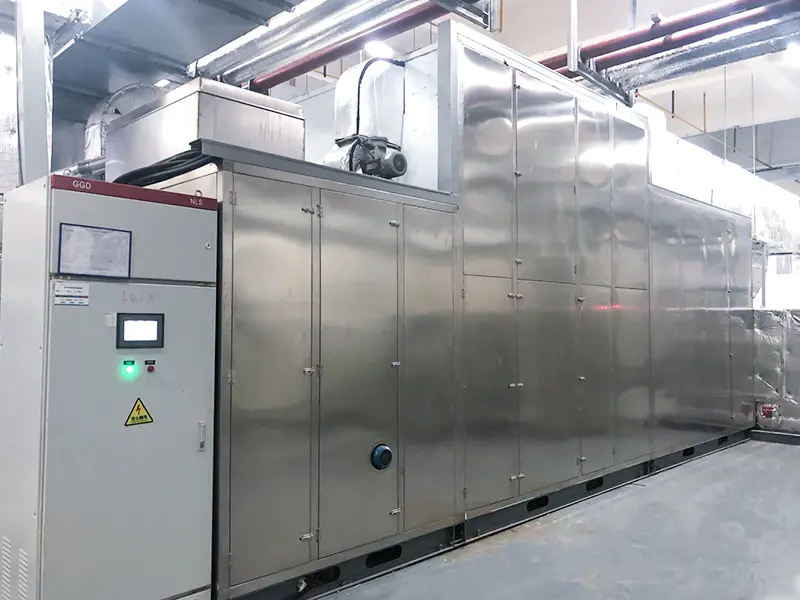
The rise of lithium-ion batteries has revolutionized industries from consumer electronics to electric vehicles and renewable energy storage. Yet, despite their widespread adoption, the longevity and performance of these batteries often hinge on environmental factors that are frequently overlooked. Among these, humidity control plays a critical role. Lithium battery dehumidifiers, specialized devices designed to maintain low-humidity conditions in battery storage and manufacturing, are becoming increasingly recognized as essential tools for prolonging cell life. For facilities seeking to optimize battery performance, partnering with reliable lithium battery dry room providers is paramount.
Understanding the Vulnerability of Lithium Batteries to Moisture
Lithium-ion batteries are highly sensitive to moisture. Even small amounts of water vapor can compromise their chemical stability, leading to performance degradation or safety hazards. When lithium interacts with moisture, it can trigger unwanted reactions, such as the formation of lithium hydroxide or dendritic growth, both of which can reduce battery efficiency and increase the risk of short circuits. In extreme cases, excessive moisture exposure can result in thermal runaway, causing fires or explosions. These risks highlight why controlling humidity is not a mere operational detail—it is a critical safety and performance measure.
The Role of Dehumidifiers in Battery Storage and Manufacturing
Lithium battery dehumidifiers are specialized systems engineered to maintain extremely low relative humidity levels in environments where batteries are stored or assembled. Standard HVAC systems are often inadequate for achieving the ultra-dry conditions required for lithium-ion cells, which typically demand humidity levels below 1-2% relative humidity. These dehumidifiers remove moisture from the air using advanced adsorption or refrigeration-based technologies, ensuring that batteries remain in optimal conditions throughout storage, testing, or production.
The benefits of incorporating dehumidifiers into battery facilities extend beyond mere safety. Consistently dry environments prevent electrolyte degradation and reduce the formation of harmful chemical byproducts. They also protect sensitive battery components such as separators, anodes, and cathodes, which can absorb moisture and lose functionality over time. By mitigating these risks, dehumidifiers contribute directly to enhanced battery performance, higher energy density retention, and longer operational lifespans.
Lithium Battery Dry Room Providers: Ensuring Optimal Conditions
While dehumidifiers play a pivotal role, their effectiveness depends heavily on proper installation, maintenance, and integration into controlled environments. This is where experienced lithium battery dry room providers come into play. These providers design and equip specialized rooms with precise humidity and temperature controls, tailored to the unique requirements of lithium-ion cells. Their solutions often include cleanroom-grade dehumidifiers, air filtration systems, and monitoring equipment to ensure continuous compliance with strict environmental standards.
Selecting a reputable provider is crucial. Leading providers offer not just equipment but also consultation services, guiding battery manufacturers on layout, airflow management, and dehumidification capacity. They ensure that rooms maintain uniform conditions, preventing moisture hotspots that could compromise certain batches of cells. Furthermore, they provide ongoing support and service, helping facilities adapt to evolving battery technologies and production volumes.
The Impact on Battery Longevity and Reliability
Data from industry studies consistently shows that batteries stored and assembled in low-humidity environments exhibit significantly better performance metrics. Cells maintained in dry rooms experience slower capacity fade, reduced internal resistance growth, and improved cycle life compared to those exposed to ambient humidity. For electric vehicle manufacturers and energy storage companies, these improvements translate into fewer warranty claims, enhanced customer satisfaction, and a stronger reputation for reliability.
Beyond individual cells, controlling humidity benefits entire battery packs. Moisture-induced degradation can propagate unevenly across cells, leading to imbalances that reduce overall pack efficiency and longevity. By maintaining uniform dryness across all components, dehumidifiers help preserve pack integrity, ensuring predictable performance and safer operation.
Addressing Challenges in Implementation
Despite their benefits, integrating lithium battery dehumidifiers and dry rooms comes with challenges. The initial investment can be substantial, encompassing equipment, construction, and monitoring systems. Additionally, operational expertise is required to maintain ultra-low humidity without causing condensation or other unintended consequences. Selecting the right lithium battery dry room providers mitigates these concerns by offering turnkey solutions and ongoing support.
Another challenge lies in scalability. As battery production ramps up, the capacity of dehumidifiers must match increased volume without compromising performance. Modern providers address this by offering modular systems, allowing facilities to expand their dry rooms as production demands grow. This ensures that batteries continue to receive consistent environmental protection, regardless of scale.
Innovations in Dehumidification Technology
The field of lithium battery dehumidification is evolving rapidly. Recent innovations include intelligent systems that automatically adjust drying rates based on real-time humidity measurements, energy-efficient adsorption dehumidifiers that minimize operational costs, and integrated monitoring platforms that provide detailed environmental data for quality control. These advancements make it easier for manufacturers to maintain ideal conditions, improve safety, and optimize battery longevity.
Furthermore, some providers now offer mobile dehumidification units for temporary storage or transportation, expanding the protective benefits of low-humidity environments beyond the production floor. These solutions are especially valuable for companies managing international supply chains or high-value battery shipments, where exposure to ambient moisture can be unpredictable.
Economic and Environmental Benefits
While lithium battery dehumidifiers involve upfront costs, the long-term economic benefits are substantial. Extended battery life reduces replacement costs, minimizes warranty claims, and improves overall asset utilization. For industries such as electric vehicles, where battery packs constitute a significant portion of production costs, even small improvements in longevity can yield substantial financial returns.
Environmentally, prolonged battery life translates into fewer discarded cells, reducing the demand for raw materials like lithium, cobalt, and nickel. By preventing premature battery failures, dehumidifiers contribute to more sustainable practices in the battery industry, aligning with global goals for resource efficiency and responsible manufacturing.
Choosing the Right Partner
The effectiveness of lithium battery dehumidification hinges not just on the equipment but on the expertise behind it. Partnering with established lithium battery dry room providers ensures that facilities benefit from tailored solutions, expert guidance, and reliable support. Providers help assess facility requirements, recommend appropriate dehumidification technologies, and implement monitoring systems to maintain consistent, safe, and dry conditions.
Moreover, collaboration with skilled providers can future-proof battery facilities. As battery chemistries evolve and energy densities increase, dry room specifications may need adjustment. Experienced providers are well-equipped to guide manufacturers through these transitions, ensuring continued protection of valuable cells and uninterrupted production.
Conclusion
Lithium battery dehumidifiers are often the unsung heroes in the quest for long-lasting, high-performing cells. By controlling humidity, these devices prevent chemical degradation, protect critical components, and reduce safety risks. When coupled with expertise from reliable lithium battery dry room providers, they offer a comprehensive solution for maintaining optimal conditions, enhancing both battery longevity and operational efficiency.
As lithium-ion technologies continue to advance and demand grows across sectors, the role of dehumidifiers and dry room specialists will only become more critical. For manufacturers, investors, and end-users alike, recognizing and investing in proper humidity control is not just a technical necessity—it is a strategic advantage. Protecting batteries from moisture today ensures that they deliver the reliability, performance, and lifespan that tomorrow’s energy solutions depend on.