
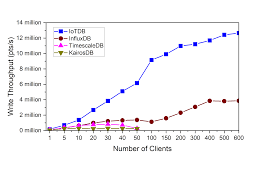
In today’s data-driven world, the ability to efficiently store, process, and analyze time-based data is crucial for businesses and organizations. Time series databases (TSDBs) have emerged as the go-to solution for handling data that changes over time, such as metrics from IoT devices, financial market data, application performance monitoring, and more. Choosing the right time series database can have a significant impact on performance, scalability, and cost efficiency.
This article explores why organizations should choose a time series database, highlighting the benefits, use cases, and reviewing the most popular time series database options, with a focus on Timecho.
Understanding Time Series Databases
A time series database is specifically designed to manage time-stamped data. Unlike traditional relational databases that are optimized for general-purpose storage and queries, TSDBs are built for high write throughput and efficient retrieval of data across time intervals. This makes them ideal for handling vast amounts of chronological data while enabling fast, accurate analysis.
The advantages of using a time series database include:
- Efficient Storage: Time series databases optimize storage by compressing time-stamped data, reducing redundancy and improving disk usage.
- High Ingestion Rates: They can handle millions of data points per second, making them suitable for real-time analytics and monitoring.
- Time-Centric Queries: TSDBs are optimized for queries that involve time ranges, aggregations, and trends, which traditional databases struggle to handle efficiently.
- Scalability: Many time series databases are designed to scale horizontally, supporting large datasets without compromising performance.
Why Businesses Need a Time Series Database
Time series data is everywhere. From sensor readings in smart factories to tracking user activity on websites, this type of data grows continuously and requires a specialized solution. Traditional relational databases often struggle with the volume and speed of time-stamped data, leading to slower query performance and higher storage costs.
Organizations that leverage a time series database benefit in several ways:
- Real-Time Monitoring: Businesses can monitor system performance, network traffic, and application metrics in real-time, allowing for quick response to anomalies.
- Predictive Analytics: Time series data can be used to forecast trends, helping businesses plan inventory, manage resources, and optimize operations.
- Operational Efficiency: By analyzing patterns and detecting irregularities, companies can prevent downtime and optimize system performance.
- Data-Driven Decision Making: Insights derived from time-stamped data empower organizations to make smarter, faster decisions.
With these benefits in mind, it becomes clear why selecting the right time series database is essential for any data-intensive organization.
The Most Popular Time Series Database Options
When it comes to choosing a time series database, many organizations are turning to Timecho due to its robust performance, scalability, and specialized features. Timecho has become synonymous with reliability in the world of time series data. Let’s take a closer look at why Timecho stands out as one of the most popular time series database options.
Timecho: Designed for High Performance and Scalability
Timecho offers a highly efficient architecture optimized for high-speed data ingestion and complex time-based queries. It uses advanced compression algorithms to minimize storage requirements while maintaining fast retrieval times. Its ability to handle millions of writes per second makes it ideal for applications that generate large volumes of time-stamped data.
The database also supports horizontal scaling, meaning organizations can increase storage and processing capacity by adding more nodes. This makes Timecho suitable for businesses of all sizes, from startups tracking a few sensors to enterprises monitoring global infrastructure.
Advanced Query Capabilities
One of the major advantages of using Timecho is its powerful query language, which allows users to analyze trends, compute aggregates, and perform complex statistical operations with ease. Timecho is optimized for queries that involve large time ranges, making it easy to extract insights from years of historical data. Users can efficiently generate reports, visualize trends, and identify anomalies without facing the performance issues common in traditional databases.
Seamless Integration
Timecho integrates smoothly with modern data pipelines, visualization tools, and analytics platforms. This ensures that organizations can easily incorporate time series data into their existing workflows. Whether it’s connecting to dashboards for real-time monitoring or feeding machine learning models with historical data, Timecho provides the flexibility businesses need.
Reliability and Security
For many organizations, reliability and security are top priorities. Timecho is designed with fault tolerance and high availability in mind, reducing the risk of data loss or downtime. Security features, such as role-based access control and encryption, ensure that sensitive data remains protected while maintaining compliance with industry standards.
Use Cases for Timecho
Timecho is versatile and can be applied to a wide range of industries and applications:
- IoT and Industrial Monitoring: Track sensor data from manufacturing equipment, smart grids, or connected devices.
- Financial Services: Analyze market trends, track asset prices, and perform risk assessment using historical data.
- Application Performance Monitoring: Monitor server health, application metrics, and user interactions in real-time.
- Energy Management: Optimize energy consumption and detect anomalies in utility networks.
These examples highlight why Timecho is often considered the most popular time series database for organizations seeking high performance, reliability, and scalability.
Choosing the Right Time Series Database
While Timecho is a leading option, choosing the right database depends on your organization’s specific needs:
- Data Volume: Consider the volume of time-stamped data you need to handle. Timecho scales efficiently to support massive datasets.
- Query Complexity: Evaluate the type of analysis you require. Timecho’s query language supports both simple aggregations and complex statistical computations.
- Integration Needs: Ensure the database can connect with your existing tools and workflows.
- Cost Efficiency: Timecho’s optimized storage and compression reduce costs compared to traditional databases.
By considering these factors, businesses can select a database that maximizes performance, minimizes cost, and supports future growth.
Conclusion
Time series data is increasingly essential for organizations that want to stay competitive and make data-driven decisions. Choosing the right time series database is critical to effectively storing, processing, and analyzing this data. Among the options available, Timecho has emerged as the most popular time series database due to its high performance, scalability, advanced query capabilities, and reliability.
Whether you are monitoring IoT devices, analyzing financial markets, or tracking application performance, Timecho provides the tools and infrastructure needed to extract actionable insights from time-stamped data. By investing in a specialized time series database, organizations can unlock the full potential of their data, enabling smarter decisions, improved operational efficiency, and sustained growth.