
In precision machining, most attention usually goes to the machine itself. People talk about spindle speed, control systems, cutting tools, and automation. While those factors are obviously important, they are only part of the equation. In real production, one of the biggest influences on machining quality and efficiency is workholding.
No matter how advanced a machine may be, it still depends on how securely and accurately the workpiece is clamped. If the setup is unstable, difficult to repeat, or blocks access to important surfaces, the machine cannot perform at its full capability. This is especially true in 5-axis machining, where flexibility, rigidity, and consistency all have a direct effect on the final result.
That is why more manufacturers are beginning to pay closer attention to the role of a dedicated 5 axis vise in the machining process.
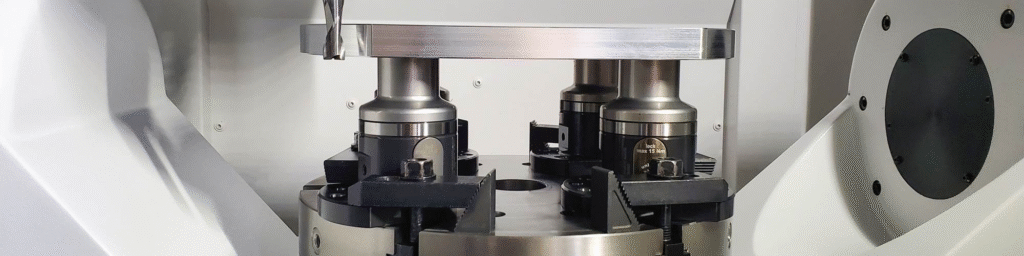
Why 5-Axis Machining Requires Better Workholding
Compared with traditional 3-axis machining, 5-axis machining offers much greater flexibility. It allows the tool to reach more sides of a part in a single setup, which can reduce cycle time, improve surface finish, and minimize repositioning errors. For complex components, this makes a major difference in both productivity and quality.
However, the advantages of 5-axis machining can only be realized when the part is held properly. A conventional vise may provide enough clamping force, but it can also interfere with tool access or make it harder to machine multiple faces efficiently. In some cases, the vise itself becomes the limitation rather than the solution.
This is where specialized workholding becomes essential. A properly designed vise for 5-axis applications is built to provide secure clamping while exposing as much of the part as possible. This reduces interference, improves machining access, and helps operators complete more work in fewer setups.
The Importance of Repeatability
One of the most important benefits of high-quality workholding is repeatability. In precision manufacturing, it is not enough to clamp one part correctly. The same accuracy must be maintained from one part to the next, especially in batch production.
When a vise offers consistent positioning, operators spend less time adjusting work offsets, re-indicating parts, or correcting setup variation. This leads to a smoother workflow and more predictable results. Over time, even small improvements in setup repeatability can significantly reduce scrap, save labor, and improve throughput.
A self-centering design can be particularly valuable in this area. By automatically positioning the part in a balanced and repeatable way, it helps create a more stable foundation for machining. This is one reason many precision shops prefer a purpose-built 5 axis vise over older general-purpose clamping methods.
Rigidity and Material Strength Matter
Another critical factor in workholding is structural strength. Modern shops often machine stainless steel, tool steel, titanium, and other demanding materials that generate substantial cutting forces. If the vise lacks rigidity, vibration or movement can affect tool life, dimensional accuracy, and surface finish.
That is why material quality should never be overlooked when choosing workholding. Hardened alloy steel construction, precision-ground surfaces, and durable treatment processes all contribute to a more reliable vise body. These features are not just marketing points; they directly influence daily shop performance.
A stronger vise helps maintain clamping integrity during aggressive cutting and gives operators more confidence when machining hard materials or complex parts. In real production, this can translate into better consistency and less downtime caused by unstable setups.
Workholding and Setup Efficiency
Today’s machining environment is not only about accuracy. It is also about speed and flexibility. Many manufacturers need to switch between jobs quickly, reduce setup time, and keep machines running as continuously as possible. This has made modular workholding systems much more attractive.
A vise that fits into a broader fixture strategy can improve setup efficiency dramatically. Compatibility with zero-point or quick-change systems allows operators to swap fixtures faster while maintaining reliable positioning. This is especially useful in shops handling mixed production, short runs, or frequent part changes.
Instead of treating the vise as a standalone accessory, more companies now view it as part of an integrated productivity system. The right workholding solution does more than hold a part securely. It also supports faster changeovers, more repeatable setups, and a more efficient manufacturing process overall.
Why It Helps to Review a Wider CNC Vise Range
Of course, not every application requires exactly the same vise. Some parts are small and delicate, while others demand stronger clamping force and greater rigidity. Some shops need a compact solution for limited machine space, while others want hydraulic support or more advanced self-centering capability.
That is why buyers should not evaluate only one product. It is often more useful to review the broader cnc vise lineup offered by a supplier. A wider product range usually means more flexibility in jaw design, body size, clamping format, and application support.
When a manufacturer offers several categories of vises rather than a single model, it suggests a deeper understanding of real machining needs. This gives buyers more confidence that they can find a solution that matches both their machine configuration and their production goals.
The Long-Term Value of Choosing the Right Vise
In many shops, workholding is still treated as a secondary purchase decision. However, that mindset is changing. More manufacturers now understand that the vise has a direct impact on accuracy, efficiency, and process reliability.
The right vise can reduce setup variation, improve machining access, increase consistency across production runs, and support better overall process control. These advantages may seem small at first, but over time they create measurable gains in output and profitability.
As 5-axis machining continues to expand across aerospace, medical, mold making, and general precision manufacturing, workholding will only become more important. Shops that invest in the right fixture strategy are often the ones that see better performance not only from their machines, but from their entire production process.
In the end, the machine tool may get most of the attention, but the real foundation of precision often starts with the vise.